


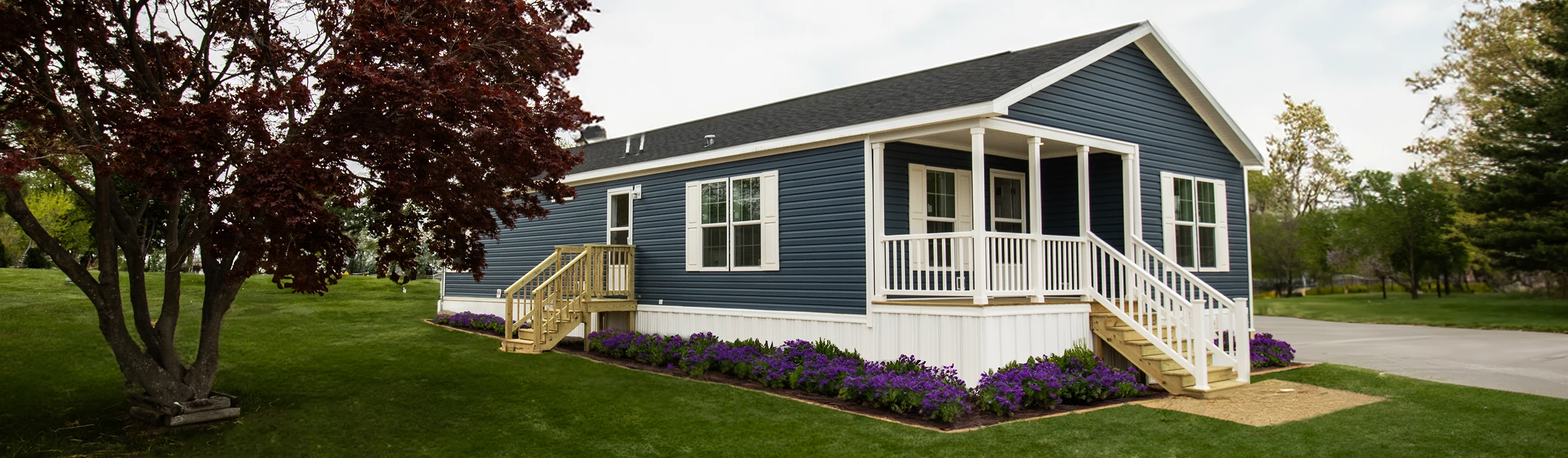
What Do Site-Built Homes Look Like In Delaware
In Delaware, buyers searching for site-built homes often encounter overlapping terms that are used inconsistently. “Mobile,” “manufactured,” “modular,” and “prefab” are frequently treated as interchangeable, despite meaningful differences in construction standards, financing, timelines, and long-term value.
This guide is written to provide clarity across these terms. The goal is to explain how each home type is defined, how costs typically break down in Delaware, how financing works in practice, and what buyers should expect from the initial decision to move-in.
Definitions That Matter
Mobile Homes
Mobile homes refer specifically to factory-built homes constructed before June 15, 1976, prior to the establishment of U.S. Department of Housing and Urban Development (HUD) standards. These homes were designed to be transported and placed on temporary foundations.
Key Characteristics of Mobile Home :
- Built before modern federal standards
- Typically depreciate over time
- Limited financing options today
- Often restricted by zoning and resale considerations
Manufactured Homes
Manufactured homes are factory-built homes constructed after June 15, 1976, and regulated by the U.S. Department of Housing and Urban Development. While still built off-site, they meet stricter safety and construction requirements than older mobile homes. They may be placed on permanent foundations and, when properly sited, can qualify for more traditional financing options than pre-1976 mobile homes.
Key Characteristics of Manufactured Homes:
- Built to HUD Code standards
- Transported to site in one or more sections
- Can be placed on permanent foundations
- Eligible for more financing options than mobile homes
Modular Homes
Modular homes are built in sections in a controlled factory environment and assembled on-site on a permanent foundation. Unlike manufactured homes, modular homes are built to the same local and state building codes as site-built homes.
Key Characteristics of Modular Homes:
- Built to local Delaware building codes
- Permanently affixed to foundations
- Appraise similarly to traditional homes
- Often indistinguishable from site-built construction
Prefab Homes (Prefabricated Homes)
Prefab is an umbrella term rather than a regulatory category. Prefab homes refer broadly to homes that are partially or fully constructed off-site. Both modular and manufactured homes can fall under this definition depending on a number of factors.
Key Characteristics of Prefab Homes:
- Descriptive, not regulatory
- Includes modular, manufactured, and panelized systems
- Quality and permanence vary by subtype
Cost Ranges in Delaware
While pricing varies by size, finishes, site work, and location, the following ranges reflect common Delaware conditions. These are typical estimates, but may vary based on the construction company you choose to work with. Due to the variety of factors that define a prefab home, we are not including them in this comparison table.
|
Home Type |
Home Cost (Average Range) |
Land/Site Considerations |
Additional Costs |
Total Investment Summary |
|
Mobile Homes |
$30k-$80k |
Land often leased |
Minimal site work |
Lowest upfront cost, but greatest long-term limitations |
|
Manufactured Homes |
$70k-$150k |
Permanent or non-permanent foundation |
Site work & foundation: $15k-$40k (Utilities and permits vary) |
Moderate upfront cost with moderate long-term flexibility |
|
Modular Homes |
$120k-$250k |
Permanent foundation on owned land |
Foundation, set & utilities: $40k-$70k |
Comparable to site-built homes with tighter cost control and value |
Financing Differences Buyers Should Understand
Mobile Homes
Mobile homes are most often financed as personal property rather than real estate, typically through chattel loans. These loans generally carry higher interest rates and shorter repayment terms than traditional mortgages, reflecting a perceived risk and the fact that the home is not permanently affixed to land.
Manufactured Homes
Manufactured homes offer broader financing options, particularly when they are placed on permanent foundations and located on land owned by the buyer. In these cases, manufactured homes may qualify for FHA, VA, and certain conventional loan programs, and overall financing terms tend to improve substantially when land ownership is part of the transaction.
Modular Homes
Modular homes are financed in much the same way as site-built homes. Because they are constructed to local building codes and permanently attached to foundations, they are eligible for standard construction-to-permanent loans, appraised similarly to traditional homes, and are insured under the same frameworks as conventional residential properties.
Timelines From Decision to Move-In
|
Home Type |
Primary Timeline Stages |
Average Timeframe |
Notes on Process Efficiency |
|
Mobile Homes |
Purchase and placement |
1-3 months |
Minimal permitting → faster path to occupancy |
|
Manufactured Homes |
Factory build and delivery |
2-4 months |
Site preparation often overlaps with factory construction |
|
Modular Homes |
Factory build |
6-10 weeks |
Site work occurs concurrently with off-site construction |
Zoning and Placement Considerations in Delaware
Delaware municipalities vary widely in what they allow. Manufactured and modular homes may be permitted in some residential zones but restricted in others. Modular homes generally face fewer zoning barriers because they meet local building codes.
Buyers should verify zoning procedures early for their choice of home, particularly for modular homes on privately owned land.
Choosing the Right Path
The right housing choice depends on the buyer’s priorities. Buyers focused on speed and lower entry costs may lean toward manufactured homes. Buyers prioritizing long-term value, financing flexibility, and resale comparability often choose modular construction.
Looking to find the right home to match your style?
Check out Manufactured Homes for Sale in Delaware.