


Retirement brings a significant financial question into sharper focus: should you continue to own a home, or is it more practical to rent?
In earlier stages of life, ownership is often associated with long-term investment and stability. In retirement, the equation changes. Income is typically fixed, priorities shift, and the true cost of maintaining a home becomes more visible.
Delaware offers favorable tax conditions and a growing number of active adult communities, yet the structure of housing costs varies meaningfully between owning and renting. A clear comparison can help determine which path better supports both financial stability and day-to-day comfort.
The True Cost of Owning a Home in Retirement
Homeownership is often described as a long-term asset, but in retirement, it must be managed with careful attention to ongoing costs.
Even without a mortgage, several expenses remain:
- Property taxes: Delaware is known for relatively low property taxes, though they still represent a recurring obligation that may rise over time.
- Maintenance and repairs: Roofs, HVAC systems, plumbing, and exterior upkeep continue regardless of life stage, often requiring significant investment.
- Insurance: Homeowners insurance, and in some cases flood coverage, adds to annual expenses.
- Utilities and services: Landscaping, snow removal, and general upkeep may require outside assistance.
In addition, there is the matter of equity. Funds tied up in a home are not readily accessible for healthcare, travel, or other priorities that often define retirement years.
The Financial Reality of Renting in Retirement
Renting offers a different structure, one centered on predictability rather than long-term accumulation.
Monthly rent typically consolidates several costs that homeowners manage separately. While rent may increase over time, the overall financial picture is more consistent:
- No major repair expenses: Structural and system failures are handled by property management.
- Simplified budgeting: A single monthly payment replaces a range of variable costs.
- Greater liquidity: Savings remain available for personal use rather than being tied to property.
For many retirees, this arrangement reduces financial uncertainty, particularly when income is fixed.
Delaware’s Housing Landscape for Retirees
Delaware continues to attract retirees due to its tax advantages and proximity to major metropolitan areas. Housing demand reflects this trend.
Interest in apartments, rental communities, and 55+ living options has grown steadily across the state. At the same time, there has been increased development of active adult communities that offer an alternative form of ownership, one that reduces the burden of traditional home maintenance while preserving the benefits of owning.
Renting vs Owning: A Direct Cost Comparison
A side-by-side view clarifies how these choices differ in practice.
Upfront Costs
- Owning: Down payment, closing costs, and potential renovations
- Renting: Security deposit and initial lease commitment
Monthly Costs
- Owning: Property taxes, insurance, utilities, maintenance reserves
- Renting: Fixed monthly rent, often inclusive of certain services
Unexpected Expenses
- Owning: Roof replacement, appliance failure, structural repairs
- Renting: Typically none beyond standard living costs
Long-Term Financial Impact
- Owning: Equity accumulation, but limited liquidity
- Renting: No equity, but greater flexibility and cash access
For retirees, the comparison often favors cost clarity and reduced responsibility, though the right choice depends on individual priorities.
Lifestyle Considerations Beyond Cost
Financial analysis alone does not determine the best option. Daily living conditions are equally important.
Ownership offers:
- Familiarity and permanence
- Control over the property
Renting offers:
- Minimal maintenance responsibility
- Access to shared amenities
- Greater flexibility to relocate
In addition, a third path has become increasingly relevant: low-maintenance ownership within a 55+ community, which combines the stability of owning with a more manageable lifestyle.
Why Many Retirees Are Reconsidering Traditional Homeownership
A noticeable shift has occurred in recent years. Retirees are re-evaluating what ownership should look like in this stage of life.
Several factors influence this change:
- Fixed income places greater emphasis on predictable expenses
- Ongoing maintenance can become physically and financially demanding
- Social connection becomes a more prominent priority
- Downsizing is often desirable but not always simple in a traditional home
As a result, many individuals are exploring alternatives that retain ownership while reducing day-to-day responsibilities.
A Closer Look at Columbia Place
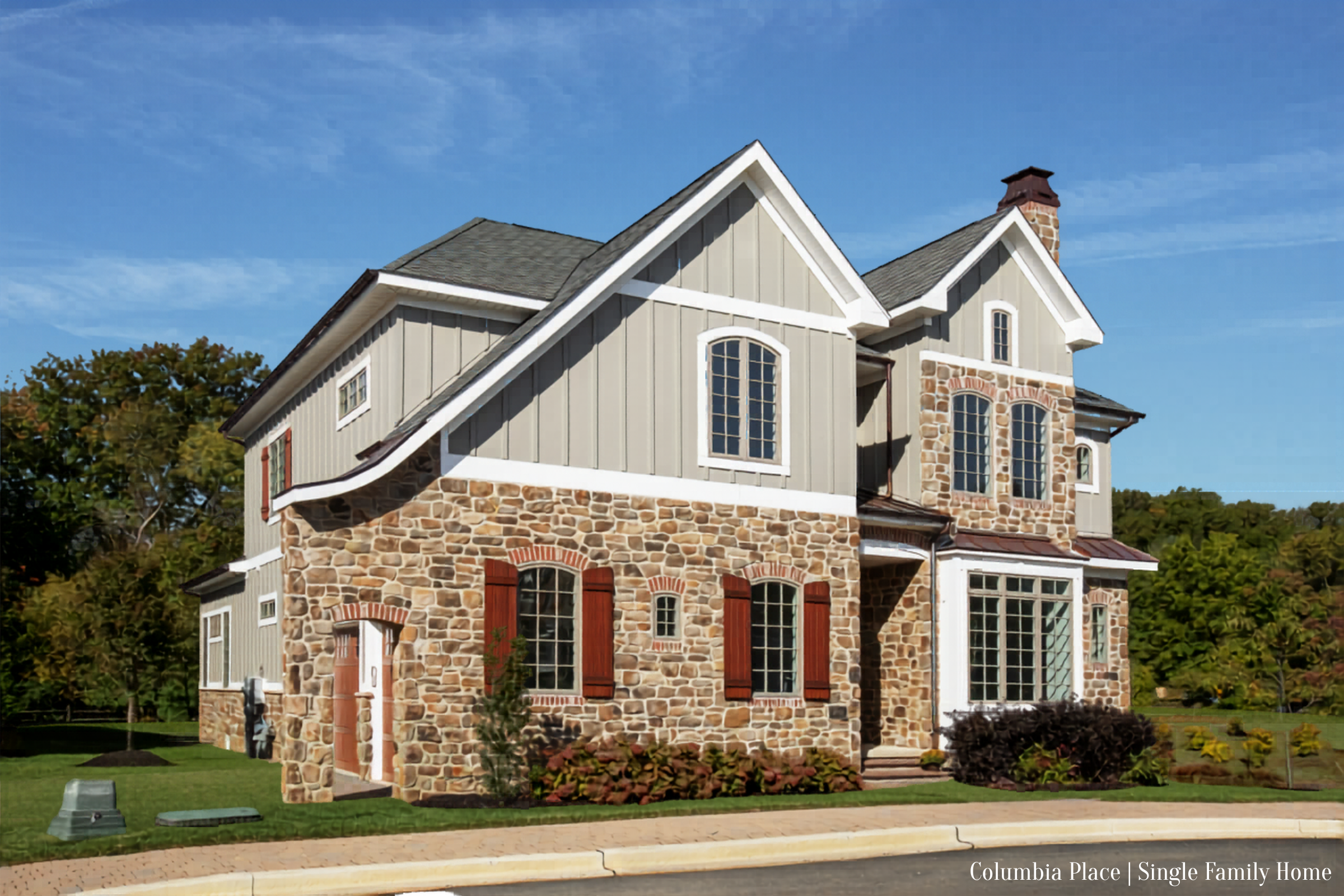
Within this evolving landscape, Columbia Place represents a distinct approach: full homeownership within a thoughtfully designed 55+ community.
Unlike rental communities, every home at Columbia Place is 100 percent resident-owned. At the same time, the community is structured to reduce many of the burdens typically associated with ownership.
Key features include:
- Resident ownership with long-term value, rather than lease-based living
- Professionally managed maintenance services, including landscaping, which reduce routine upkeep
- A community environment designed for active adult living, with shared amenities and opportunities for connection
- A location that balances accessibility with a quieter residential setting
For individuals comparing renting and owning, Columbia Place offers a third alternative: maintaining ownership while minimizing the responsibilities that often accompany it.
When Owning May Still Be Appropriate
There are circumstances in which traditional homeownership remains a strong choice:
- A fully paid home with minimal maintenance requirements
- A strong preference for long-term permanence
- Financial resources sufficient to absorb unexpected costs
However, these conditions are not universal. For many retirees, the balance shifts as priorities evolve.
How to Decide What Fits Your Situation
A practical approach is to evaluate three areas:
- Financial structure: Are your monthly costs predictable and manageable?
- Lifestyle preferences: Do you prefer independence, community, or a balance of both?
- Future flexibility: Will your needs change over time?
Answering these questions often clarifies whether renting, traditional ownership, or low-maintenance ownership provides the most appropriate foundation.
A Practical Perspective on Retirement Living
The traditional view of homeownership as the default choice does not always hold in retirement. What matters most is how well your housing supports financial stability and everyday life.
For many individuals in Delaware, renting offers simplicity and flexibility. For others, communities such as Columbia Place demonstrate that it is possible to retain the advantages of ownership while reducing the obligations that typically accompany it.
Explore Your Options
If you are considering a move and weighing your options, it may be useful to look beyond a simple renting versus owning comparison.
Columbia Place offers an opportunity to experience a model of ownership designed specifically for this stage of life. A visit or conversation can provide a clearer understanding of whether this approach aligns with your plans for retirement.